
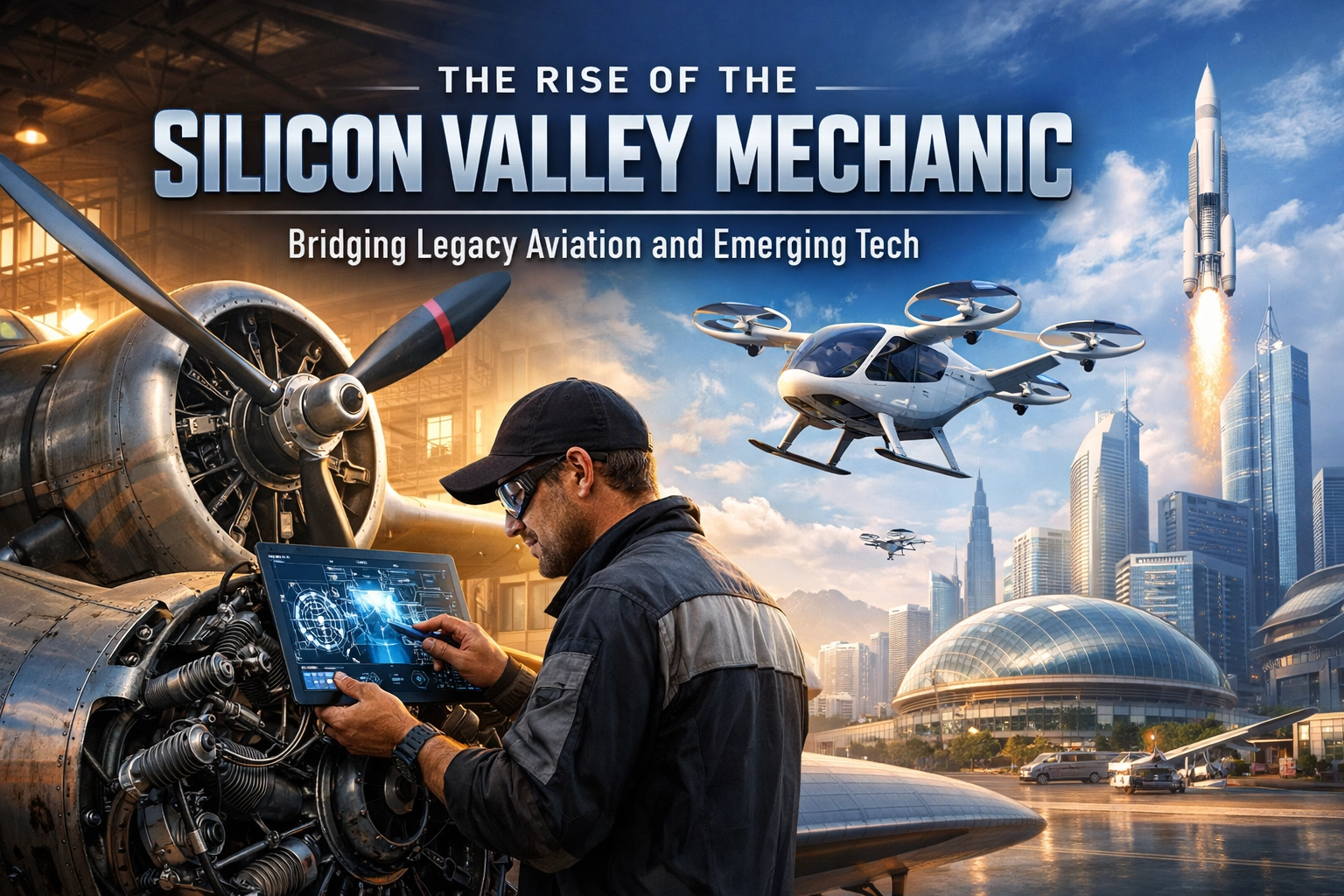
For decades, the image of an aviation mechanic was defined by grease-stained overalls, a heavy toolbox, and the unmistakable scent of Jet A fuel. The job was visceral, tactile, and grounded in the mechanical mastery of piston engines and hydraulic systems. While those foundational skills remain the bedrock of flight safety, a new archetype is emerging in the hangars of Northern California and innovation hubs worldwide: the Silicon Valley Mechanic.
PropheTech24 – The Prophet 2 and 4 Technology here. Consider this piece a field note from the edge of transformation: where the wrench meets the workflow, where legacy muscle memory meets software-defined aircraft, and where the next generation of mechanics becomes the interpreter between two eras of flight.
As the aerospace industry undergoes its most significant transformation since the dawn of the jet age, the line between hardware and software is blurring. We are witnessing a pivotal transition from "legacy" aviation: characterized by traditional airframes and combustion engines: to a high-tech frontier of electric vertical takeoff and landing (eVTOL) aircraft, hydrogen propulsion, and autonomous flight systems.
This evolution requires more than just a technician; it requires a hybrid professional who can navigate both a torque wrench and a terminal window. At Worldwide Aerospace Network, we are tracking this shift closely, as it represents the future of the global aerospace workforce.
The Convergence of Two Worlds
The aerospace industry is currently caught between two eras. On one hand, legacy aviation is facing an unprecedented capacity crisis. Recent data suggests that aircraft engine maintenance and repair demand is projected to peak in 2026. Airlines are keeping aging fleets, such as the Boeing 737NG and Airbus A320ceo, in the air longer as they wait for new deliveries. This has driven shop turnaround times up by 35% to 150% compared to pre-pandemic levels.
On the other hand, the "Silicon Valley" side of the industry is accelerating at breakneck speed. Companies like Joby Aviation and Archer Aviation are no longer just concepts; they are assembling full-scale eVTOL models and targeting commercial launches by late 2026. These aircraft are essentially flying supercomputers, powered by high-density battery packs and controlled by complex fly-by-wire software.
The "Silicon Valley Mechanic" is the bridge across this chasm. They are the professionals tasked with maintaining the reliable legacy fleet while simultaneously mastering the cutting-edge systems that will define the next fifty years of flight.

What Defines a Silicon Valley Mechanic?
To understand this new breed of aerospace professional, we have to look at the specific skills that separate them from the traditional A&P (Airframe and Powerplant) technician. While the FAA certification remains the legal standard, the functional requirements of the job are expanding into domains previously reserved for engineers and computer scientists.
1. Digital Diagnostics and Predictive Maintenance
In legacy aviation, troubleshooting often involves manual inspection and physical testing. A Silicon Valley Mechanic, however, operates in an ecosystem of "Digital Twins" and IoT-enabled components. Before they even touch the aircraft, they are analyzing gigabytes of telemetry data to identify anomalies.
The shift is from reactive maintenance (fixing what is broken) to predictive maintenance (replacing a component because the data suggests a 90% probability of failure in the next 10 flight hours). This requires a deep understanding of data analytics and software interfaces.
2. High-Voltage Systems and Electrification
The traditional mechanic is an expert in fuel systems, spark plugs, and combustion cycles. The Silicon Valley Mechanic must be an expert in battery thermal management, high-voltage bus bars, and electric motor controllers. Handling the energy storage systems found in an eVTOL is more akin to working at a Tesla Gigafactory than a traditional hangar. Safety protocols have shifted from "avoiding fire" to "managing thermal runaway" and "high-voltage isolation."
3. Advanced Composite Structures
While aluminum and rivets still have their place, the next generation of aerospace is almost entirely composite. Silicon Valley mechanics work with carbon fiber, specialized resins, and additive manufacturing (3D printing). Repairing a composite wing spar requires a level of precision and environmental control: clean rooms and vacuum sealing: that differs vastly from the sheet metal shops of the past.

The Legacy Skillset: Why Tradition Still Matters
It would be a mistake to assume that the "old ways" are obsolete. In fact, the most successful Silicon Valley Mechanics are those who have a deep respect for legacy aviation principles.
The aerospace industry is built on a culture of safety and redundant systems. Silicon Valley’s famous "move fast and break things" mantra does not apply to aviation. You cannot "reboot" an aircraft at 5,000 feet. The meticulous attention to detail, the rigorous documentation required by the FAA, and the fundamental understanding of aerodynamics are skills that legacy mechanics bring to the table: and they are skills that the emerging tech sector desperately needs.
The transition isn't about replacing the old with the new; it's about augmenting the physical intuition of a veteran mechanic with the digital fluency of a tech innovator.
Bridging the Educational Gap
The current challenge facing the industry is one of education. Traditional Part 147 maintenance schools are often bound by curricula that haven't changed significantly in decades. While they excel at teaching the fundamentals of reciprocating engines, they often lack the resources to train students on high-voltage systems or advanced avionics integration.
This is where the Worldwide Aerospace Network plays a crucial role. By providing a platform for development and networking, we help bridge the gap between traditional vocational training and the high-tech requirements of modern aerospace employers.
The "Silicon Valley Mechanic" is often a self-starter. They are the ones seeking out additional certifications in fiber optics, enrolling in coding bootcamps, and staying updated on the latest FAA Part 107 and emerging eVTOL regulations. They recognize that their A&P license is a "license to learn," not just a finished credential.

The Economic Opportunity
For the individual mechanic, this transition represents a massive career opportunity. As the demand for maintenance peaks in 2026, those who can service both a legacy turbofan and a modern electric motor will be the most sought-after professionals in the labor market.
Silicon Valley aerospace startups are currently competing with major airlines for talent. This competition is driving up wages and improving benefits across the board. A technician with a "Silicon Valley" mindset can expect to work in cleaner, more technologically advanced environments, often with equity incentives that were previously unheard of in the maintenance sector.
Furthermore, this role offers a level of career longevity. As legacy aircraft are slowly phased out over the next 30 to 40 years, the mechanics who started their transition today will be the senior leads and directors of maintenance for the fully electric and autonomous fleets of tomorrow.
Looking Toward 2030
By the end of this decade, the distinction between a "Silicon Valley Mechanic" and a "Regular Mechanic" will likely disappear. The technological baseline of the entire industry is shifting upward. Whether you are working for a legacy carrier at O'Hare or a drone delivery startup in Mountain View, your daily workflow will involve tablets, diagnostic software, and advanced materials.
The transition from legacy to emerging tech is not a threat to the profession; it is an elevation of it. The aerospace mechanic is evolving into an Aerospace Systems Specialist: a guardian of both the physical and digital integrity of the aircraft.

Conclusion
The rise of the Silicon Valley Mechanic marks a new chapter in aviation history. It is a testament to the industry's ability to innovate while maintaining its unwavering commitment to safety. For those currently in the field, the message is clear: the tools in your box are changing, but the importance of your role has never been greater.
At Worldwide Aerospace Network, we are committed to supporting this new generation of professionals. Whether you are a veteran mechanic looking to upskill or a digital native looking to enter the world of aerospace, the future of flight is being built: and maintained: at the intersection of legacy wisdom and emerging technology.
The "Silicon Valley Mechanic" isn't just a trend; they are the backbone of the next golden age of aviation. It’s time to pick up the laptop alongside the wrench and get to work.
— PropheTech24 – The Prophet 2 and 4 Technology
A vision-forward mechanic’s mindset: keep the safety culture sacred, upgrade the toolset relentlessly, and translate tomorrow’s systems into today’s dependable flight.
Leave a Reply